
Mission, governance and the National Centres of the European Society of Culture.
“A dialogue should be conceived as the spiritual process determined by the encounter between two different ideas that tend towards a common truth”
The European Society of Culture (SEC) is committed to promoting the political and civic responsibility of culture, fostering dialogue and exchange among people of culture. In this perspective, the SEC considers culture an essential means of building shared values, understanding and addressing social and political crises, and contributing to the search for responses and solutions to the challenges facing the contemporary world.
Since its foundation, the SEC has sought to develop dialogue and cooperation across cultural, political and social boundaries, strengthening the role of culture in promoting peace, justice, freedom and democratic values in Europe and beyond. Through its international network and cultural initiatives, the SEC provides a space for exchange, reflection and cooperation.
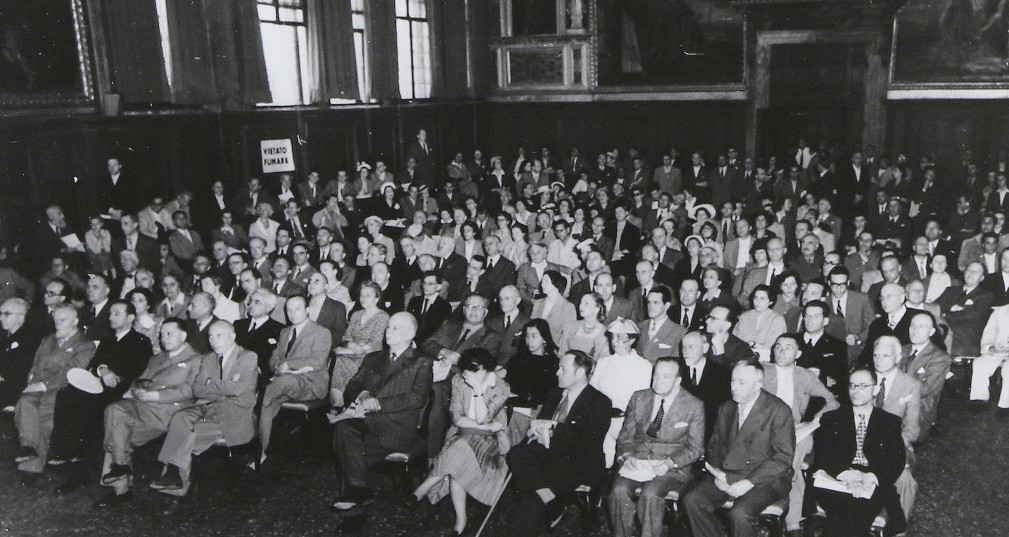
The European Society of Culture (SEC) is organised according to a governance structure established by its Statute, which defines the Society’s governing bodies, their respective responsibilities and their procedures.
The General Assembly is the supreme body of the Society and determines the programmes and initiatives necessary to achieve its purposes. The Statute also provides for the Executive Council, the International Bureau, the Board of Directors and the Board of Auditors. National and local Centres constitute territorial structures of the Society.
The General Assembly is the supreme body of the Society. It determines the programmes and initiatives necessary to achieve the Society’s purposes.
The General Assembly meets in ordinary session at least once a year and whenever the President considers it necessary. It is also convened when requested by at least three members of the Executive Council.
Approval of the financial statements is entrusted to members resident in Italy, who are convened annually in General Assembly for this purpose.
The General Assembly elects the President of the Society, the Deputy President, the Vice-Presidents, the International Secretary General, the Editor responsible for Comprendre and the members of the Executive Council. It also elects the members of the Board of Directors and the Auditors.
The Executive Council acts as a link between the national and local Centres, the International Bureau of the Society and the Vice-Presidents.
It contributes to the preparation of programmes and to the implementation of decisions adopted by the General Assembly. The Executive Council is also responsible for the recruitment and admission of members, helping to bring new intellectual forces from different countries into the Society and its activities.
Composition
The Bureau consists of the President, the Deputy President, the Vice-Presidents, the International Secretary General and the Director of Comprendre.
The Bureau periodically reviews the activities of the Society and, upon a proposal from the President in agreement with the International Secretary General, sets the agenda of the General Assemblies.
The Deputy President, the Vice-Presidents, the International Secretary General and the Director of Comprendre assist the President in implementing the Society’s programme and the decisions of the General Assembly.
Composition
The International Secretary General is a member of the International Bureau and performs the functions specifically assigned by the Statute.
The International Secretary General oversees the functioning of the Society’s headquarters, which serves as the reference centre for the Society’s institutional relations; prepares statutory meetings, in particular the ordinary General Assembly devoted to the “present conditions of culture”; supervises special initiatives; and serves as Editor-in-Chief of Comprendre and of the Society’s other publications.
The President may also delegate the legal representation of the Society to the International Secretary General when necessary.
The Society is administered by a Board of Directors, chaired by the President of the Society.
The Board of Directors meets regularly to prepare the provisional budget and the final accounts, which are submitted to the General Assembly of members resident in Italy.
Composition
The Board of Auditors provides oversight of the administration of the Society.
It verifies the regularity of the Society’s financial management and prepares the reports relating to the provisional budget and the final accounts.
Composition
The Executive Council may establish national or local Centres of the Society.
The board of each Centre is constituted in agreement with the International Secretary General and assists the Society in its promotional and organisational activities, with the cooperation of members operating in the relevant territory.
All members of the Centres must also be members of the international SEC.
A Centre established as a foundation or association under the law of the country in which it is located has its own representative in the General Assembly.
Offices are honorary and carry no remuneration (Art. 6(2), Decree-Law no. 78/2010), including those of the Auditors.
The Statute of the European Society of Culture, approved by the Constituent Assembly held in Venice from 28 May to 1 June 1950, with amendments from subsequent Assemblies.