The origins and history of the Société Européenne de Culture (European Society of Culture), from its foundation in Venice in 1950 to the present day.
The European Society of Culture (“Society”) was promoted by the philosopher of law and philosopher of politics Umberto Campagnolo (1904-1976) and founded in Venice in 1950. Umberto Campagnolo first presented the concept of a European organisation capable of bringing together intellectuals and leading figures of culture at the Rencontres Internationales de Genève in September 1946. He was convinced that the forces of culture had to take on their own proper responsibility in the face of the deep political, and also cultural, divisions that had emerged in Europe after the Second World War, with a commitment of ethical nature.
In the following years he devoted himself to gathering support for the project and creating the material conditions necessary for its realisation, which were guaranteed by Giovanni Ponti, the “Mayor of the Liberation” and at the time Extraordinary Commissioner of the Venice Biennale. An international Promoting Committee was established, which worked to obtain a substantial number of memberships in one of the most acute phases of the Cold War.
The European Society of Culture's Constituent Assembly was held in Venice from May 28 to June 1st 1950, approving the Society's Statutes on June 1st. Nearly 300 artists, philosophers, writers, and other leading cultural figures took part in the birth of the new International Association. The Society was conceived not only as a place of cultural exchange, but as an association committed to affirming the political and civic responsibility of culture, independent of any political or state control. Its aim was to affirm the need for a politics of culture, which Campagnolo distinguished from cultural policy, that is, from cultural planning by politicians. By politics of culture he meant the action of men1 of culture in defence of the conditions for the existence and development of culture itself, therefore presupposing the widest possible openness to different philosophical and ideological positions as a political action founded on what unites men of culture (as Campagnolo called them, distinguishing them from those generally referred to as “intellectuals”) and not on what divides them.
The “man of culture” was therefore someone who was committed to the autonomous development of culture, regardless of his profession. These figures were to be distinguished both from scholars, for whom culture had value only as something to be possessed, and from those who performed an intellectual function, that is, those for whom culture constituted a practical activity. Men of culture were expected to address political issues while acting on the very conditions that shaped intellectual activity, without thereby turning themselves into professional politicians. The European Society of Culture, as an organization that brought together precisely “men of culture” rather than intellectuals, was not concerned with the content of culture, but rather with the forms of its development2.
The European Society of Culture aimed to strengthen the values of civilisation, promote dialogue, and help create the conditions for true peace as established in the Statutes’ First and Second Article voted by the Constituent Assembly:
“The first and foremost object of the European Society of Culture is to unite by bonds of joint interest and increasingly intimate friendship the men of culture who are conscious of their necessity and duty to set afoot by their harmony of aim and action, the greatest possible effort to save and improve the conditions required for the development of culture in a universal sense as justification of our civilisation, men who are willing to contribute within their limits of their specific responsibilities to the solution of the European problems.”3
For Umberto Campagnolo, culture offered a space in which people holding deeply different political convictions could meet, compare their views and work together on the basis of shared values.
This conviction took on particular importance during the Cold War, when relations between Eastern and Western European men of culture and artists were often extremely difficult.
The European Society of Culture created opportunities for connecting men of culture and artists belonging to different political and ideological traditions, encouraging exchange and discussion. The Association thus became an instrument for overcoming political divisions and fostering dialogue between different conceptions of society, culture and democracy, offering spaces for shared thoughts at a time when Europe was divided by the so-called Iron Curtain.
Among the figures associated with the foundation in its early years were some of Europe’s most important people of culture and protagonists, including Theodor Adorno, Julien Benda, Norberto Bobbio, Albert Camus, Benedetto Croce, André Gide, J. B. S. Haldane, Carl Jung, Thomas Mann, Henri Matisse, François Mauriac, Maurice Merleau-Ponty, Jean-Paul Sartre, Giuseppe Ungaretti and Albert Schweitzer.
In the following years the Society also developed important relations with Central and Eastern Europe’s people of culture and artists, including Bertolt Brecht, Ernst Bloch, Ilya Ehrenburg and Georg Lukács. In France, leading people of culture such as Jean Lacroix, Paul Ricœur, François Perroux, André Breton, Marc Chagall and Louis Jouvet, among others, took part in the association's activities.
In 1960 Umberto Campagnolo was nominated for the Nobel Peace Prize in recognition of the European Society of Culture’s contribution to building harmony among peoples.
From the late 1950s to the mid-1970s, under the guidance of Campagnolo, the Society cemented its presence on the international cultural scene, making culture an instrument of dialogue, mutual understanding and cooperation.
In an age marked by ideological and political confrontation, the Society kept the exchange between men of culture from different countries and systems open. The network of national centres, active in several countries, strengthened this international vocation, creating meetings and relationships among scholars, writers, artists, and leading figures of European culture.
General assemblies, conferences, international meetings, and the European Society of Culture's members’ work offered a permanent space for discussing major actuality themes, giving concrete form to the principle of the politics of culture enshrined in the Society's founding documents.
Of particular importance was the dialogue between Western and Eastern Europe. The Society sought to keep relations between Central and Eastern Europe and the Soviet Union’s men of culture open, with the conviction that culture could create a space of encounter beyond political and ideological divisions: not to erase differences, but to address them through discussion, mutual knowledge and the search for a common humanistic horizon.
In this perspective, the role played by the international cultural and political journal Comprendre (subtitled Revue de politique de la culture), founded together with the European Society of Culture and edited by Umberto Campagnolo until his death in 1976, was particularly significant. The journal was one of the main instruments through which the Society developed and disseminated its conception of the politics of culture. Through essays, interventions, and documents, Comprendre addressed the great questions of the time: international relations, peace, freedom of culture, the relationship between culture and politics, the responsibility of the men of culture, the comparison between different political and cultural systems and the transformations of contemporary society.
The Society intensified its ideas on the relationships between culture, politics and society. The contemporary world’s transformations, the competition between countries’ blocs, international tensions, and the growing role of science and technology raised new questions about the role of the men of culture. The European Society of Culture sought to address these questions from an interdisciplinary perspective.
A particularly significant moment was the meeting of the Society's Executive Council held in Leningrad in 1968. In a year marked by the Prague Spring and by deep international tensions, the meeting bore witness to the Society's determination to keep cultural dialogue alive even in a phase of sharp international political confrontation. The presence of representatives from eleven countries and different cultural contexts without preconditions (even a member from Franco's Spain was able to take part), concretely embodied the idea upheld by Campagnolo that dialogue among people of culture must continue even in times of greatest difficulty.
Beyond international dialogue, the European Society of Culture dedicated growing attention to peace themes, the responsibility of men of culture and the freedom of culture. Culture was conceived not so much as a heritage of knowledge, but as the creative freedom of the human spirit. In this perspective, the politics of culture developed by the European Society of Culture aimed to promote people’s conscious participation in the great problems of their time without turning the Society into a political association.
During this period, the European Society of Culture's relationship with Italian and international institutions was also firmly cemented. The growing recognition of the Society and the support it received from institutions helped to strengthen its structure and to guarantee the continuity of its activities. At the same time, the Society always maintained its autonomy, founded on the exchange between different positions and on freedom of discussion, the foundation of its own credibility.
In the 1970s, as the international framework went through new transformations, the European Society of Culture continued to question the role of culture and of people of culture in contemporary society. International détente did not eliminate ideological and political divisions but opened new possibilities for dialogue. The Society therefore continued its meetings, assemblies, debates, and publications’ activity, with the central aim of fostering mutual understanding between different cultures and countries.
The last years of Umberto Campagnolo, Comprendre‘s Secretary General and Editor, were characterised by the continuity of this approach and by the need to engage with a world profoundly changed from that of the post-war period. The European Society of Culture had by now cemented its own international identity and a network of relationships that allowed it to continue to serve as a meeting place for different ways of conceiving the role of culture.
With the death of Umberto Campagnolo in 1976, the long founding phase of the Society came to an end. For almost thirty years he had helped to define not only the structure of the Society, but above all its identity and its conception of culture as an instrument of dialogue and civic responsibility. The legacy of this approach would continue to guide the Society's activity in the following years, even in the face of the profound transformations of the European and international context.
At the beginning of the 1980s the European Society of Culture found itself in a particular phase. After the death of its founder, Umberto Campagnolo, in 1976, the Society went through a period of slowdown, keeping, however, its international structure and its commitment to dialogue between different cultures. In 1976 the editorship of Comprendre was entrusted to Norberto Bobbio. Michelle Campagnolo-Bouvier took the post of Secretary General of the International Centre, which continued to be based in Venice.
After the presidency of Beniamino Segre, Adriano Buzzati-Traverso became President of the European Society of Culture, determined to strengthen its interdisciplinary vocation. As a scientist of international standing and a protagonist of European and international scientific cooperation, including through his experience at UNESCO, Buzzati-Traverso made dialogue between cultures and international cooperation one of the foundations of his activity.
He was followed by the presidency of Giuseppe Galasso, who held the office until 1988. The Galasso presidency is particularly important because it coincides with a phase of profound change in Eastern Europe. A crucial moment was the General Assembly in 1986 in Belgrade, devoted to the theme “L'Europe de la culture dans le nouveau climat Est-Ouest.” The European Society of Culture began to question the transformations of the international system and the new emerging European. According to the reconstruction by Michelle Campagnolo-Bouvier, it was precisely during the Galasso presidency that the Society sought to keep its original message alive, adapting it to the new international context.
In 1988 Vincenzo Cappelletti was elected President. A historian of science and scholar of interdisciplinarity, he proposed greater attention to transnational scientific projects and spoke of the need for a European initiative in support of Eastern Europe and consideration of Europe’s future. Themed, “L'Europe de la culture dans le nouveau climat Est-Ouest,” the 19th General Assembly of the European Society of Culture was held in Bari on October 22 to 25, 1988.
The parallel documentation from Le Monde was particularly interesting because it showed how the theme, “L'Europe de la culture dans le nouveau climat Est-Ouest” was trying to interpret the effects of the reforms of Mikhail Gorbachev and the opening up of Eastern Europe. People of culture from, East Germany, Hungary, Poland and Yugoslavia, among others, took part in the assembly. The assembly highlighted the contradictions of the moment: while the Soviet reforms were viewed with hope, questions such as the Berlin Wall and the Polish and Czechoslovak situations remained open.
The end of the Cold War made the traditional function of “bridge” between Western and Eastern Europe less immediate, and the Society therefore sought to reinterpret the politics of culture in the light of the new international scenario. A document from the Historical Archives of the European Union confirms that in February 1990 the European Society of Culture organised a meeting at the Society's Soviet Centre in Moscow held on February 11 to 18, 1990, entitled “L'Europe de la culture: sources communes, développements divergents, nouvelle collaboration.”
This conference was a fundamental moment of dialogue, set in an extraordinary historical context, a few months after the fall of the Berlin Wall in November 1989, and in the midst of the Perestroika era led by Mikhail Gorbachev before the final dissolution of the Soviet Union. The new European reality raised different questions from those that had characterised the previous decades. The opposition between two political and ideological systems was replaced by more complex processes in which aspirations to integration and tendencies to fragmentation coexisted, and culture was called upon once again to question its own capacity to foster mutual understanding, counter new forms of conflict and contribute to building a European coexistence founded on dialogue.
These issues found a particularly significant formulation in the 21st General Assembly of the European Society of Culture held in Venice on October 8 to 10, 1993, dedicated to the theme “Scissioni, sfaldamenti, nuove aggregazioni e politica della cultura.” The very title of the Assembly reflected the new European scenario, and the Society thus continued to question the role of the men of culture in the face of political and social change. The politics of culture took on a new dimension, it was no longer only a matter of creating opportunities for dialogue between two opposing realities, but of understanding the dynamics that were transforming European society and of identifying new instruments to foster dialogue, cooperation, and mutual understanding.
During the 1990s the relationship between culture and globalisation also gained growing importance. Faced with the processes of globalisation, Society asked whether it was possible to preserve the plurality of cultures without turning differences into new forms of opposition. Faced with processes of disintegration, the need emerged to identify new instruments of dialogue capable of strengthening coexistence and cooperation.
A particularly significant moment of this pondering was the Society’s conference of June 7 to 9, 1995 in Budapest themed, “Les hommes de culture devant les forces de la désagrégation et de la globalisation dans la société d'aujourd'hui.“ Culture was once again called upon to perform a function of mediation and understanding in a profoundly changed reality: no longer a Europe divided into two blocs but a continent crossed by new tensions, new identities and new processes of integration. The fiftieth anniversary of the European Society of Culture's original idea also offered an opportunity to reflect on the relationship between the Society's history and the challenges of the new European context. The meeting “L'Europe, la culture, la paix. A vingt ans d'un héritage spirituel. A cinquante ans d'une idée: la SEC, 1946“ took place on October 25 and 26, 1996, in Venice. The initiative directly recalled the origin of the Society and the insight of Umberto Campagnolo, while proposing a reflection on the relevance of its principles today.
The original mission was not abandoned but reinterpreted in the light of the new historical conditions, in the conviction that in a world ever more interconnected and yet crossed by new divisions, cultural dialogue remained an essential instrument for mutual understanding and for building peace.
A central principle of the Society is the principle that artistic creation cannot be separated from cultural and social debate and has a political value. The men of culture have the responsibility to draw the attention of political decision-makers and of public opinion to the human and cultural dimensions of the great challenges facing society.
For Umberto Campagnolo this responsibility required the development of a politics of culture, a political approach capable of recognising culture not simply as one sector of public life but as a fundamental force in the creation of shared values and in the building of peace.
This idea has continued to evolve within the European Society of Culture. In a later formulation, Edgar Morin, another great figure of the European Society of Culture, spoke of a “politics of civilisation,” understood as an approach capable of creating and renewing the values on which societies are founded.
The Society therefore regards dialogue between men of culture as an essential moment of the political action aimed at safeguarding and improving the human condition. International, national, and regional political institutions cannot, on their own, promote an authentic cultural debate without the contribution and mediation of civil society and of those directly engaged in the questions of culture.
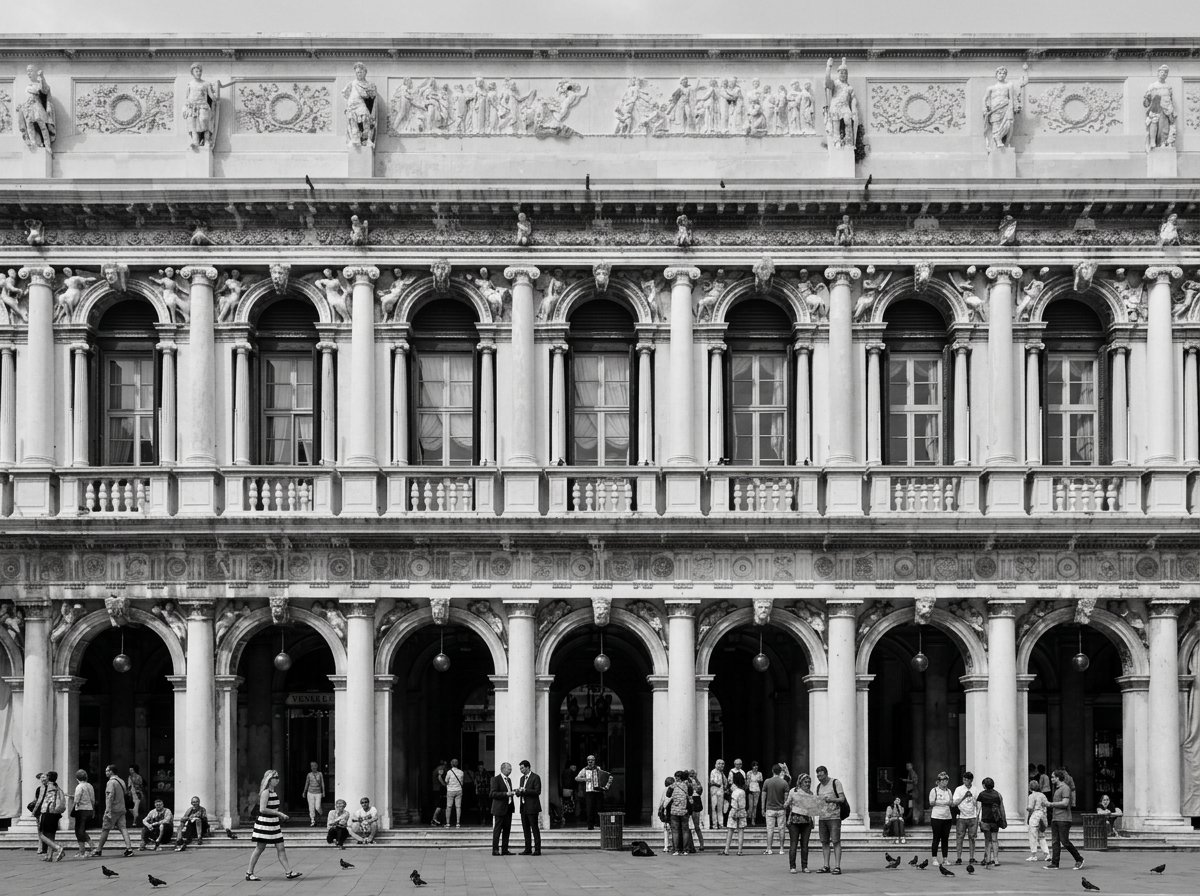
The European Society of Culture's official working language is French. Its international seat remained in Venice for over six decades. During its 65 years of presence in the city, the association was based in several historic locations:
The European Society of Culture's Statutes have been amended on several occasions over the decades. Between 1950 and 2023 sixteen editions of the Statutes were drawn up, while the successive amendments have preserved their original fundamental inspiration.
The Executive Council and General Assembly meet every year. The most recent General Assembly, held in Brussels in 2025, was themed “Europe between geopolitics and cultural identity.”
More than seventy years after its foundation, the European Society of Culture continues to pursue the principle at the heart of Umberto Campagnolo's original project: culture can create spaces of dialogue where political divisions would otherwise prevail.
From the confrontation between East and West during the Cold War to the challenges that today concern Europe and the world, the Society has sought to bring together different artistic and cultural traditions to address the great questions of contemporary society.
Its history is therefore not only the history of an association, but also that of a conviction that continues over time: culture is a condition of dialogue, a source of shared values and an essential instrument for peace.
In the words of Umberto Campagnolo, the aspiration of the Society can be expressed simply as, “a peace that has the same value for everyone.”
A great recognition of the European Society of Culture’s importance, earnt by Michelle Campagnolo-Bouvier and Cosima Campagnolo (2011-2023) even at a time when the SEC was unable to hold Councils and Assemblies regularly as it had in the past, is of having the Society's historical part archive housed at the Historical Archives of the European Union, in Fiesole, Florence. The Society’s archive, amounting to about 230 linear metres, is entirely preserved and made scientifically available to scholars, in the prestigious setting of Villa Salviati and online throughout the world.
The founding documents, in French, are available in PDF format:
Documents in French, in PDF format. Source: SEC France.
Further information on the Society's historical archive is available in the SEC Fonds (Archives) section.