“... nous sommes fondés à considérer Socrate comme notre maître et à faire de lui notre symbole...”
Umberto Campagnolo
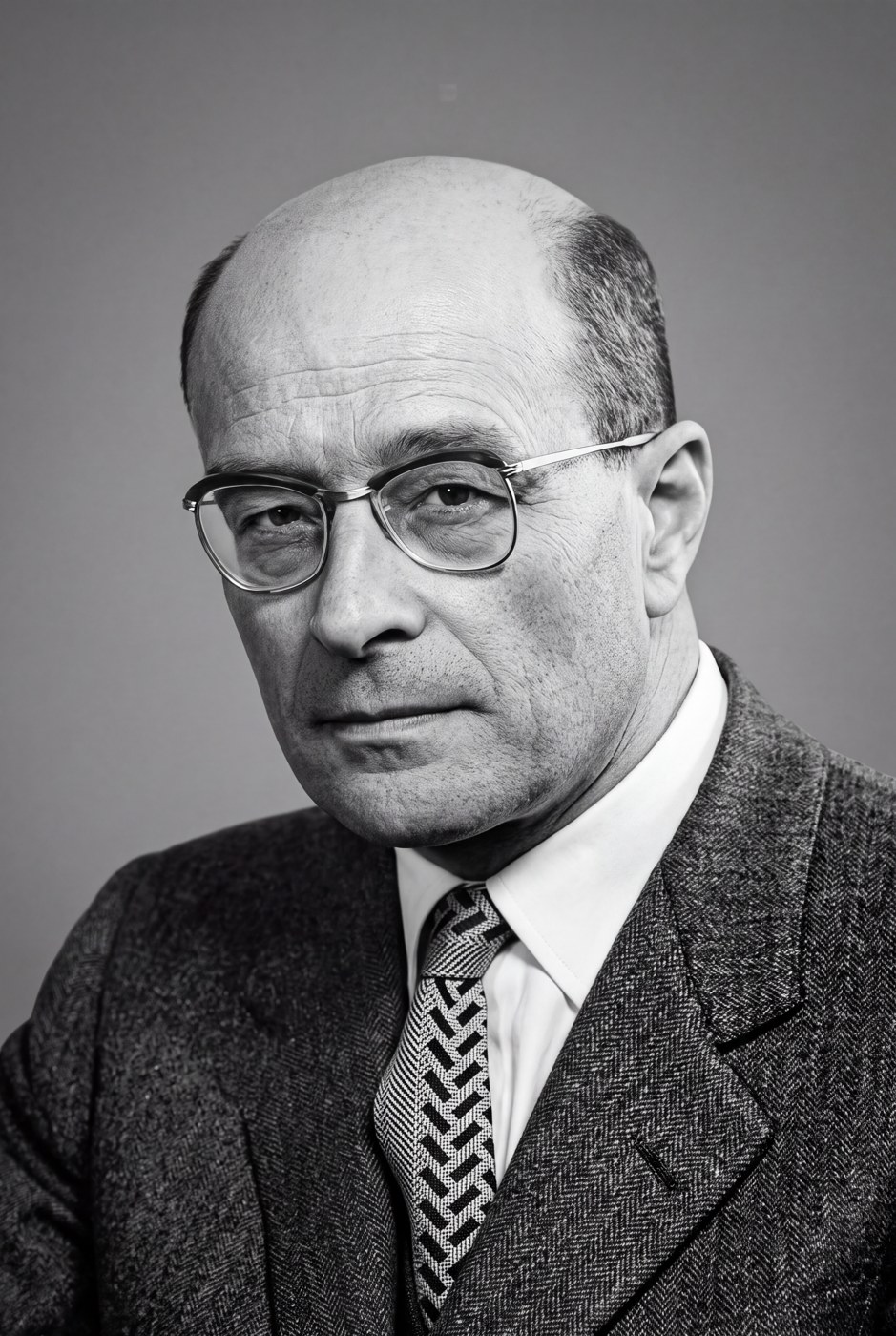
Umberto Campagnolo, Geneva, c. 1958-1960. Photo: Paul Boissonnas / Historical Archives of the European Union (HAEU), SEC-340_01 · sharpness enhanced with AI
“The European Society of Culture is often defined as an attempt to preserve the dialogue threatened by the antagonisms that are increasingly and more deeply dividing Europe and the world. This interpretation […] is, in our view, entirely valid, provided, so long as the dialogue is understood […] as the spiritual process arising from the encounter between two different ideas that tend towards a common truth.” (Umberto Campagnolo, 1952)
Umberto Campagnolo was born in Este, in the province of Padua, on 25 March. His father, Matteo, was a retired Marshal of the Carabinieri; his mother, Elvira Vascon, the daughter of a small-scale merchant and landowner.
Campagnolo left his accountancy studies he had begun at his father’s insistence to help his family and started working for the Municipality of Este. He was appointed head of the food-rationing department.
He resumed his studies, expeditiously earning his qualification in accounting.
Squadrist violence took place in the Este area. Campagnolo was among its victims. From this time onward, he was avowedly anti-Fascist.
While working in accounting and providing specialist consultancy, he studied Latin, Greek, languages and history. He studied predominantly at night, ultimately compromising both his eyesight and his general health.
Having prepared independently, he successfully completed the secondary-school leaving examinations as a private candidate before enrolling in the Faculty of Arts and Philosophy at the University of Padua. There, his academic formation included courses taught by such eminent figures as Manara Valgimigli, Concetto Marchesi, and Cesare Musatti.
In October 1931, he was awarded a doctorate in philosophy, graduating summa cum laude. His thesis, entitled Gnôthi seautón (“Know thyself”, supervised by Erminio Troilo), was daringly original, situated between self-analysis and what might be called philosophical anthropology.
He worked as a temporary teacher at the Tito Livio secondary school in Padua. His pupils, including Giulio Andreotti and Luigi Gui (1914-2010), held him in the highest esteem.
As joining the National Fascist Party became a compulsory requirement for educators in Italy, Campagnolo, a declared anti-Fascist from the outset, refused to enlist and consequently decided to leave the country.
In December of the same year, he arrived in Geneva-a city he chose solely for its history as an independent republic, having no prior ties to it.
Supported by a scholarship and offering private lessons, predominantly in Latin, he continued his studies at the Graduate Institute of International Studies-founded by William Rappard-and at The Hague Academy of International Law in the Netherlands.
He was awarded a doctorate in international law with the highest marks and honours, submitting a thesis entitled ‘Nations et Droit’, written under the supervision of Hans Kelsen, a scholar whose scientific positions he did not subscribe. His notes and reflections from that period were published posthumously in U. Campagnolo, Conversazioni con Hans Kelsen. Documenti dell’esilio ginevrino 1933-1940, edited by Mario G. Losano, Milan, Giuffrè Editore, 2010.
Publication of the book Nations et Droits, published in Paris by Félix Alcan. Shortly afterwards, the work was suppressed by the occupying forces. A partial Italian translation was later published in H. Kelsen - U. Campagnolo, Diritto internazionale e Stato sovrano. Con un inedito di Hans Kelsen e un saggio di Norberto Bobbio, edited by Mario G. Losano, Milan, Giuffrè Editore, 1999. See also Jean Lacroix’s critical review in Esprit. Revue internationale, VIII/86 (November 1939), pp. 92-97.
Privat-docent in the Philosophy of Law at the University of Geneva.
Campagnolo returned to Italy following his country’s entry into the war. At Olivetti in Ivrea, where he was initially assigned to the public relations department, he established the company library and contributed to the inception of Olivetti’s publishing venture, Edizioni di «Comunità».
Following the armistice of 8 September, Concetto Marchesi-then rector of the University of Padua-invited Campagnolo to teach the History of Political Doctrines within the Faculty of Arts and Philosophy. During the 1960s, Campagnolo successfully requested that the course be renamed Philosophy of Politics.
That same year, he drafted a constitution for a united Europe. The proposal remained unpublished during his lifetime and was published posthumously in 2003: U. Campagnolo, Verso una costituzione federale per l’Europa. Una proposta inedita del 1943, edited by Mario G. Losano, Milan, Giuffrè Editore, 2003.
Campagnolo further elaborated a federalist solution to the challenges facing Europe.
Following the Liberation, the National Liberation Committee and the Allied Military Government appointed Campagnolo as Commissioner of the ISPI (Institute for International Political Studies) in Milan. He held this position until approximately 1950, though he continued to lecture at the Institute for some time thereafter.
Earlier, in June 1945, he published a manifesto for a federalist Europe, Repubblica Federale Europea. Unificazione giuridica dell’Europa (Milan: Europa Unita, 1945), which he had written before the end of the war. The Italian text was republished in the series ‘I problemi della democrazia’, directed by Carlo Mongardini and Lorella Cedroni: U. Campagnolo, Repubblica Federale Europea. Unificazione giuridica dell’Europa, introduction by Lorella Cedroni, Rubbettino Editore, 2004.
Registered as a journalist he was authorised to contribute to newspapers, writing occasionally for the press, particularly Corriere d’informazione (Corriere della Sera).
Elected Secretary-General of the European Federalist Movement, Campagnolo remained in office until the end of 1947. His thesis-that a united Europe should be constructed by its peoples rather than its states, and that political aspects should take precedence over economic matters-was ultimately defeated by Spinelli's political line. He remained within the movement for a short period, leading the minority faction, before leaving definitively in 1948, accompanied by the Venetian poet Diego Valeri, among others.
At the first Rencontres Internationales in Geneva, devoted to the “European spirit”, he proposed the creation of a European Society of Culture.
Campagnolo was appointed to the chair of History of Philosophy at Ca’ Foscari University of Venice.
With the support of a founding committee, Campagnolo established the European Society of Culture (SEC) in Venice and became its Secretary-General.
From its foundation onward, his work remained indissolubly linked with that of the SEC. Consequently, only key dates have been cited here; for a comprehensive overview of his extensive bibliography and writings, readers are referred to the Society’s journal, Comprendre.
Campagnolo married Michelle Bouvier. They had two children, Matteo and Cosima.
In Venice, the Society organised the first meeting between intellectuals from East and West.
On 14 August of the same year, Campagnolo was appointed Chevalier of the Légion d’honneur.
In Rome, the SEC held its first convention with African intellectuals.
Campagnolo launched a project for a 'culturalist manifesto,' a pivotal milestone that marked the SEC’s transition from a European focus to a global outlook.
Campagnolo subsequently launched a project for a World Association of Culture. Although the initiative never materialized, the concept of establishing a network of associations with analogous objectives foreshadowed developments that would emerge in subsequent decades.
Publication of U. Campagnolo, Petit Dictionnaire pour une politique de la culture, Neuchâtel, Éditions de la Baconnière. The selection of passages from the journal Comprendre was edited by Jean Morand, the author’s most perceptive interpreter and a devoted friend.
Publication of U. Campagnolo, La plus grande révolution. Une paix qui n’a pas pour alternative la guerre, Neuchâtel, Éditions de la Baconnière, 1971.
In September of the same year, during the SEC General Assembly held in Rome, Campagnolo was appointed Grand Officer of the Order of Merit of the Italian Republic, by decision of the President of the Italian Republic.
Campagnolo subsequently retired from his aforementioned positions at the universities of Padua and Venice; at Ca' Foscari, he had long held the chair of History of Philosophy within the Faculty of Foreign Languages and Literatures.
On 6 October, in Warsaw, Campagnolo was awarded a decoration for cultural merit by the Republic of Poland.
Campagnolo died in Venice on 25 September, after a long illness which, however, never succeeded in bringing his work to a halt.
He was also awarded the Lenin Peace Prize medal (USSR) and the silver medal of the Académie française and was an honorary member of the Ateneo Veneto (Venice) and the Gabinetto di Lettura (Este).
Written by Cosima and Matteo Campagnolo
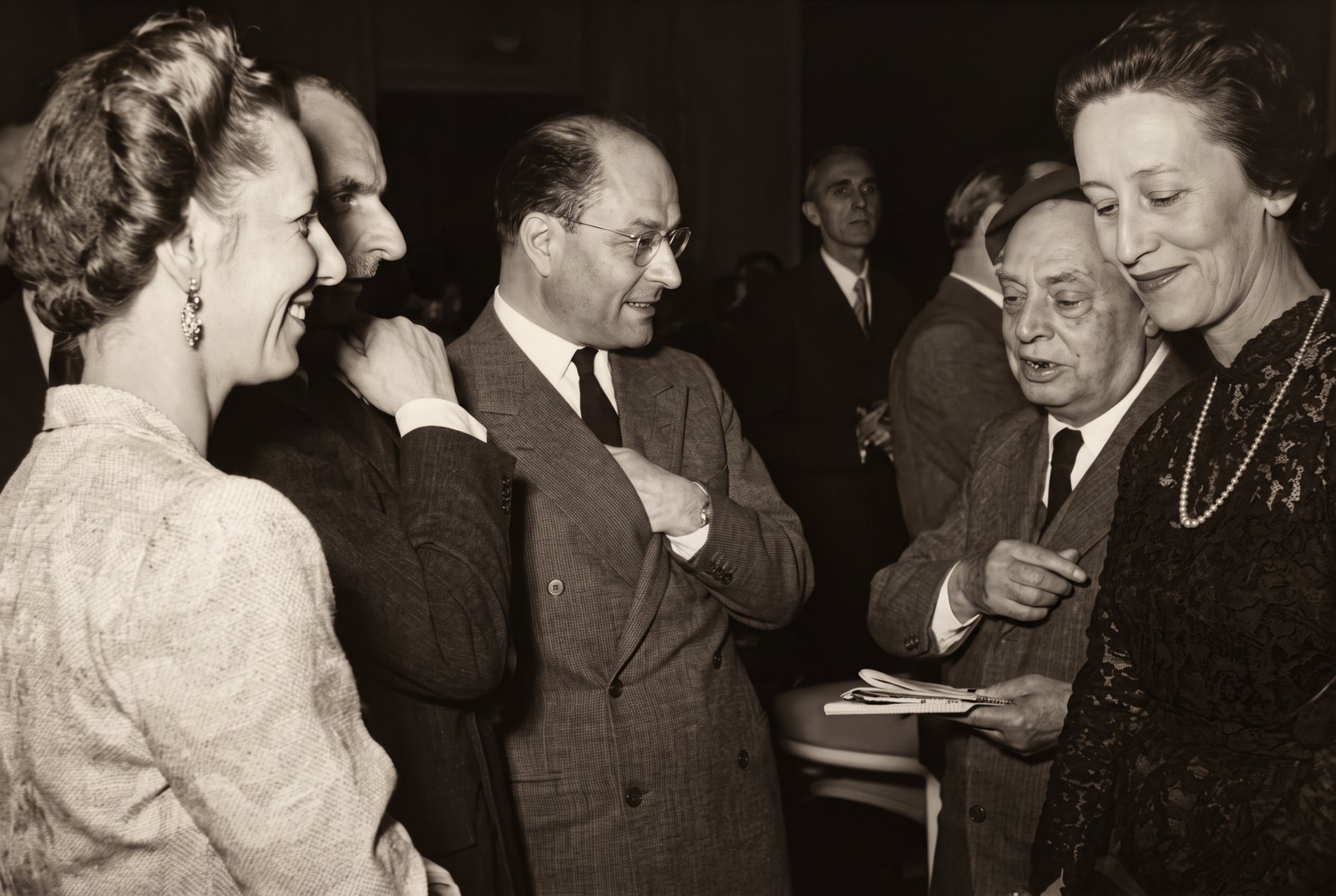
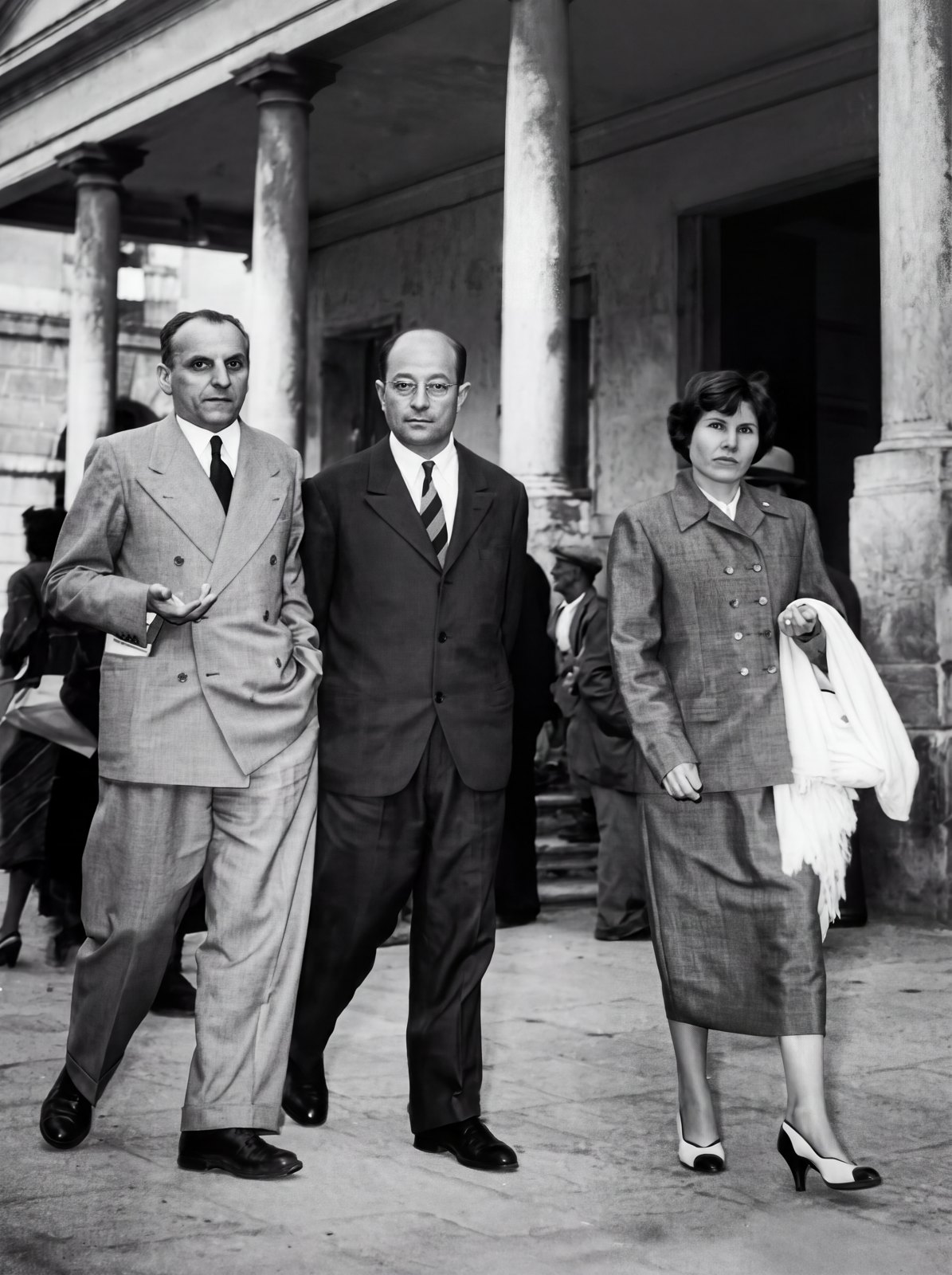
Compiled by Matteo Campagnolo.
3 publishing bulletins
Editors: Umberto Campagnolo (1950-1976); Norberto Bobbio (1976-1988);
Giuseppe Galasso (1988-2012); Lorenzo Franchini (2025- )
Archive inventory (1950-2005), edited by Michelle Campagnolo Bouvier, Monica Del Rio, Silvia Miscellaneo, Venice, Société Européenne de Culture, 2012
(partial contents survey, partly consisting of offprints; see below)